A landing page has one job: to convert a visitor into a lead, a customer, or a subscriber. Everything on the page — the headline, the imagery, the social proof, the form — should serve that single objective. When it doesn't, conversions suffer. The difference between a 2% and a 6% conversion rate is often not about traffic quality. It's about the page itself.
The Hierarchy of a High-Converting Page
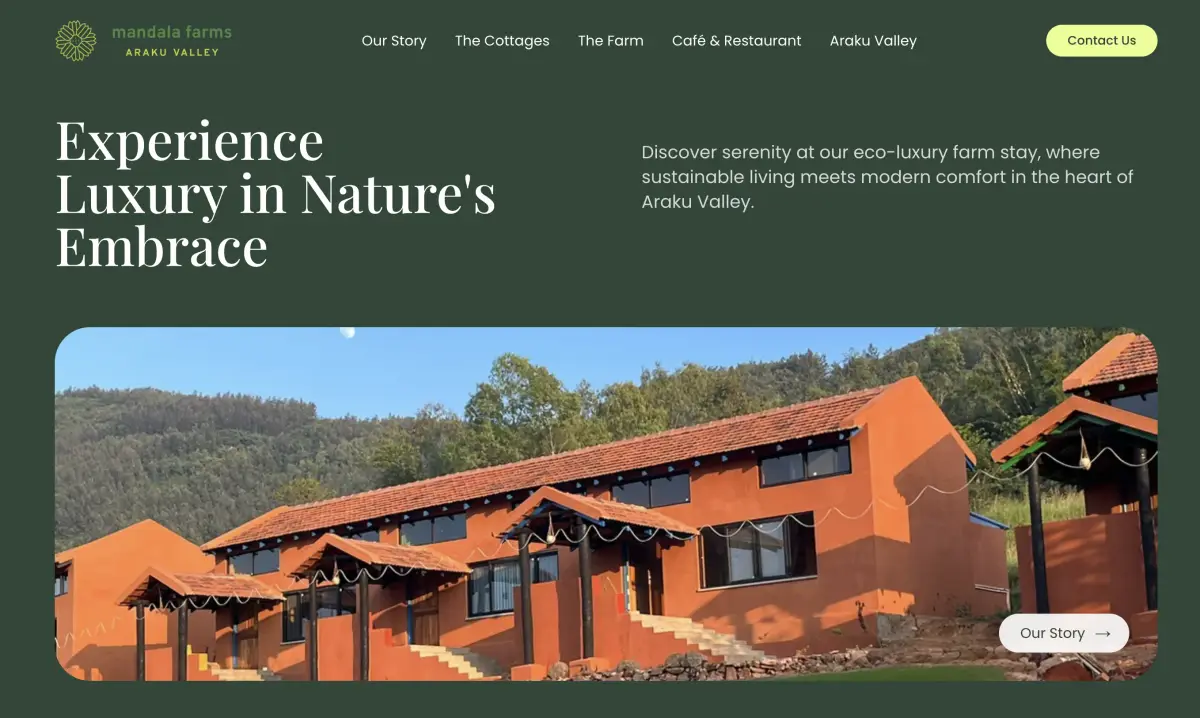
The hero section is where conversions are won or lost. If a visitor doesn't immediately understand what you do, who it's for, and why it matters — you've lost them. The headline must be specific, not clever. 'We help D2C brands increase repeat purchase rate by 40%' converts better than 'Growth, reimagined.'
The anatomy of a high-converting landing page:
- Headline: specific value proposition, not a tagline
- Subheadline: who it's for and what they get
- Hero CTA: single, action-oriented, above the fold
- Social proof: logos, numbers, or a strong testimonial — as high as possible
- Features/benefits: benefits first, features second
- Objection handling: address the top 3 reasons someone wouldn't buy
- Secondary CTA: for visitors who scroll but don't convert on the hero
- Final CTA: strong close with urgency or risk reduction
Clarity converts. Confusion doesn't. Every element on your landing page is either making the decision easier or harder. Audit it with that lens.
The Social Proof Imperative
Social proof is the most underused and most powerful element on most landing pages. People don't trust brands — they trust other people. A single specific testimonial ('We increased qualified leads by 3x in 60 days') placed near the primary CTA is worth more than any amount of feature copy.
If you have case studies, put the results front and centre. Numbers beat narratives. '47% reduction in churn' is more compelling than 'dramatically improved customer retention'. Be specific. Be concrete. Let the results speak.
Form Design: Where Most Pages Fail
Every additional field in a form costs you conversions. This is one of the most well-documented findings in conversion optimisation. If you're collecting first name, last name, email, phone, company, job title, and use case — you're losing a significant portion of potential leads who give up before submitting.
Start with the minimum information you actually need. Email only, if possible. You can collect more information in the follow-up sequence. The goal of the form is to get the first conversion — not to qualify leads at the expense of capturing them.
Testing: The Only Way to Know for Sure
Everything we know about landing pages comes from testing. Best practices are starting points, not guarantees. Your audience, your offer, and your traffic source all affect what works. The only way to know for certain is to run controlled tests: change one variable at a time, gather statistically significant data, and iterate.
At SocialScript, we build landing pages with testing in mind from the start. Component-based architecture makes swapping headlines, images, and CTAs fast. Analytics are instrumented by default. The goal isn't to build the perfect page — it's to build a page that can be improved continuously. Most of that traffic is on a phone, so placement matters as much as copy — see our guide to designing for thumb zones on mobile.