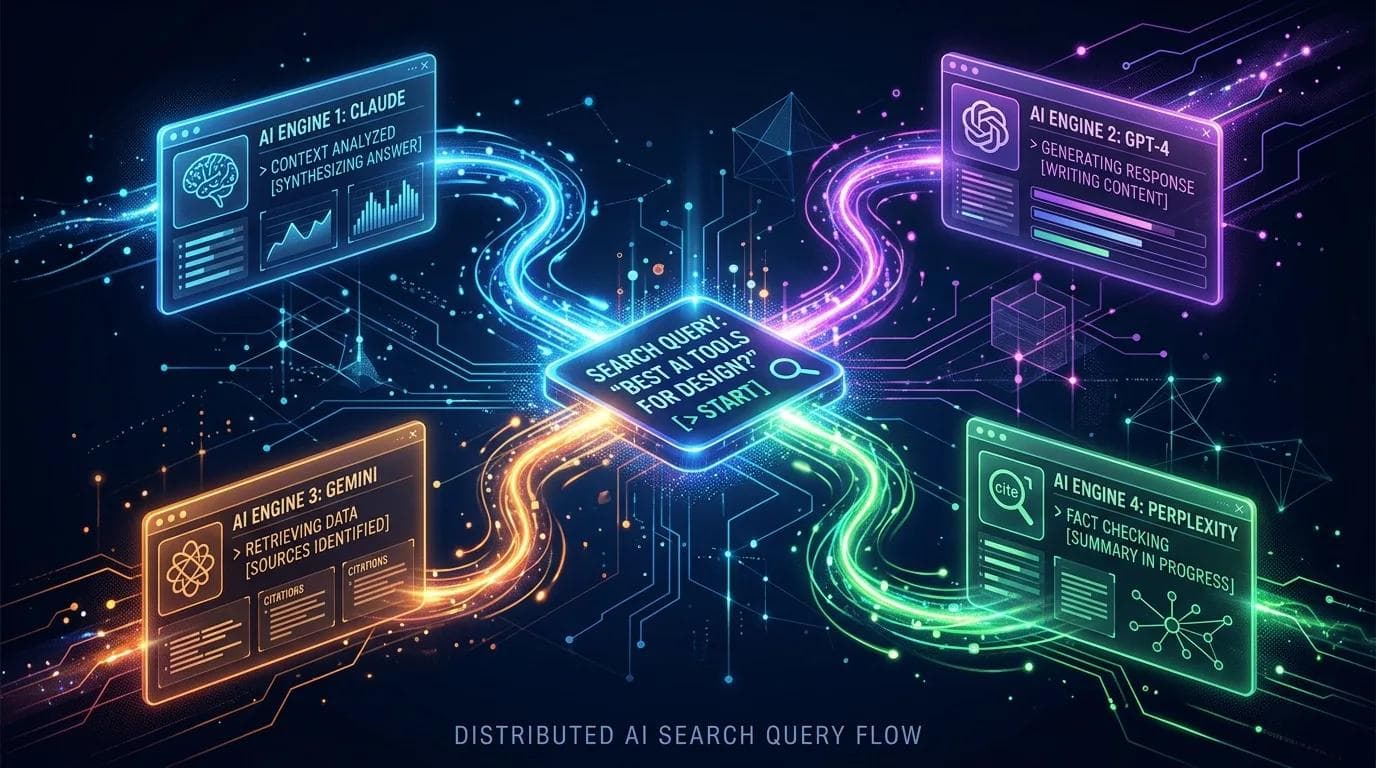
SEO in 2026 is unrecognizable from SEO in 2022. The ten blue links are still there, but they're below an AI Overview that answers the query directly, next to a Perplexity tab with citations, adjacent to SearchGPT and Copilot. The game shifted from 'rank for the query' to 'get cited in the answer.' Here's how to win the new game without abandoning the fundamentals that still work.
The numbers that matter
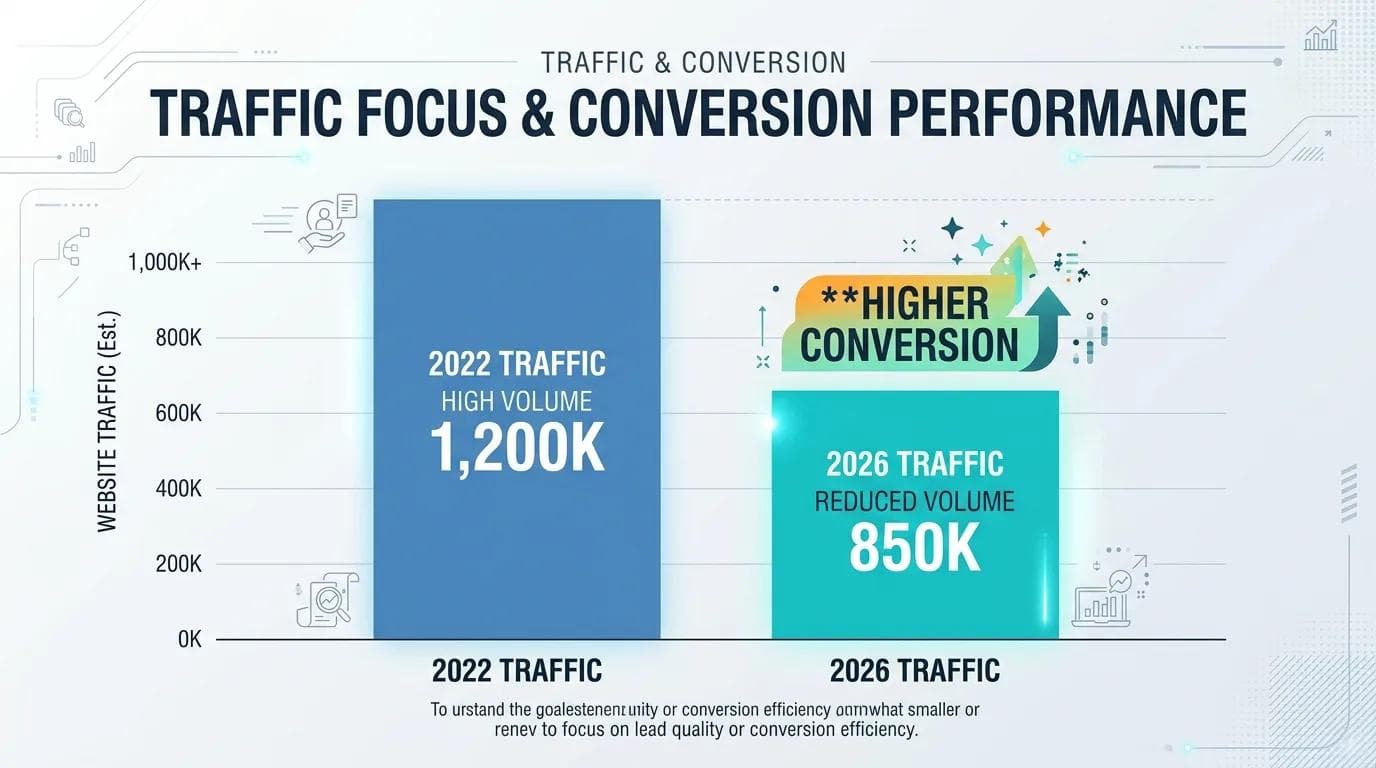
What the data shows through Q1 2026:
- Click-through from AI Overviews is 30–40% lower than pre-AIO equivalent rankings
- Transactional queries still click through at near-pre-AIO rates
- Informational queries take the biggest hit
- Users who do click through are higher-intent and convert better
- Branded search volume lift correlates with AI citation frequency
The AI search engines that matter
1. Google AI Overviews
Biggest traffic-affecting change in search history. Appears above organic for roughly 40% of informational queries in 2026. AIO citations drive measurable traffic — less than top-10 organic rank, more than position 4-5.
2. Perplexity
Smaller user base but disproportionately influential. The audience is technical — journalists, analysts, researchers — who write the next wave of content that links back. Citations here have a long tail.
3. SearchGPT (ChatGPT Search)
500M+ weekly ChatGPT users. Conversational query patterns, long session depth. Citation style is less visible than Google or Perplexity — users see answers, not citations, unless they hover — but traffic is real.
4. Microsoft Copilot
Integrated into Bing, Windows, and Microsoft 365. Smaller consumer reach, meaningful enterprise reach. If your audience is enterprise, Copilot visibility matters disproportionately.
What gets cited in AI answers
After a year of observing citations across thousands of queries for clients, the pattern is clear:
Content AI answers prefer:
- Clear single thesis answered in the first paragraph
- Firsthand data — 'we studied X, here's what we found' beats aggregated opinion
- Author expertise matching the query domain (clear bylines, bio, credentials)
- Structured data (Article, HowTo, FAQ schema) that maps to the question format
- Recent content for time-sensitive queries; evergreen for stable ones
- Domains with historical authority in the specific topic, not just high overall DR
E-E-A-T on steroids
Google's Experience-Expertise-Authoritativeness-Trustworthiness framework became much more consequential with AI. Classic SEO could get away with 'good content from a trustworthy site.' AI citation requires author-level proof of expertise.
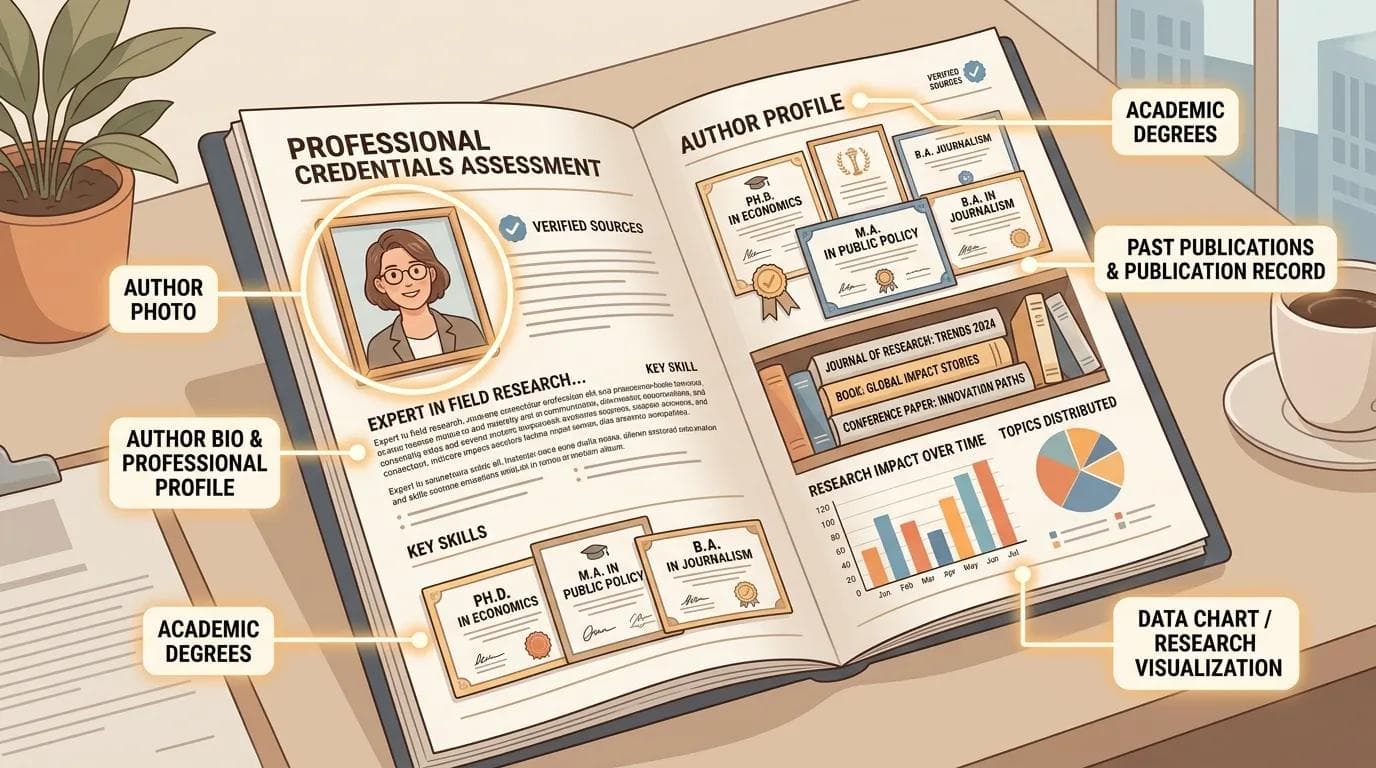
What we add to every post in 2026:
- Expanded author bios with credentials and Wikidata IDs where available
- Author schema (Person type) with sameAs links to LinkedIn, GitHub, past publications
- First-person narrative voice that signals firsthand experience
- Explicit data — screenshots, numbers, case references — not generic claims
- Clear disclosure of AI-assisted content where it matters
Technical SEO for LLMs
The technical stack for AI citation overlaps with classic SEO but emphasizes different elements. Fast and mobile-friendly still matter. What matters more:
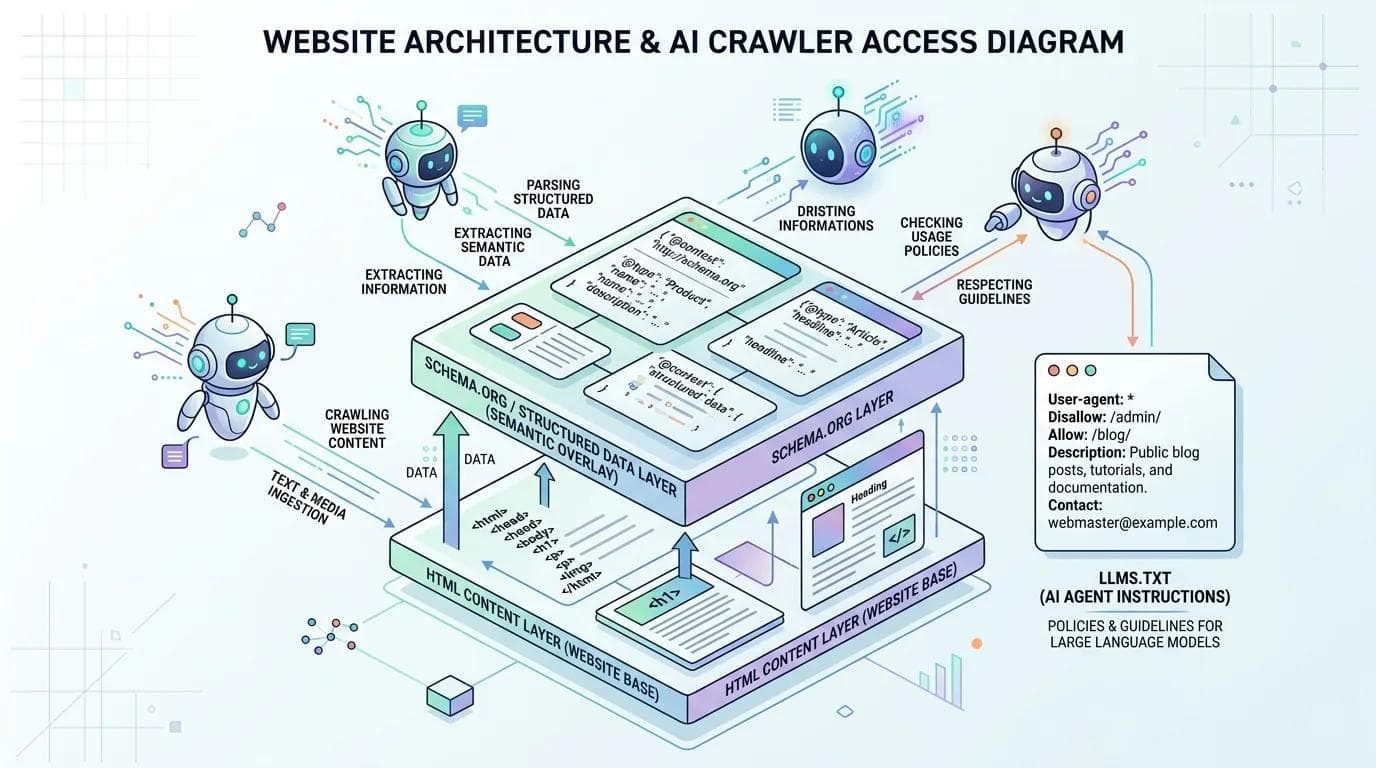
1. llms.txt
An emerging convention for telling LLMs what content to prioritize. Not all engines honor it, but Perplexity and Anthropic's indexer do. Ten minutes to set up, costs nothing.
2. Structured data
Schema has never mattered more. Article, FAQ, HowTo, Organization, and Person are the ones pulled directly into AI answers. FAQ schema in particular maps cleanly to how LLMs generate responses.
3. Semantic HTML
Proper use of h1-h6, main, article, aside, nav helps LLMs chunk content correctly. Div-only soup gets parsed worse and cited less. Underrated technical SEO signal of 2026.
4. Crawlable, JS-optional rendering
LLM crawlers render JavaScript less reliably than Googlebot. If content requires JS to appear, AI engines may not see it. SSR or SSG is non-negotiable for content you want cited.
Schema you need in 2026
The schema types that pull their weight:
- Article — every blog post or editorial page, with author (Person) and publisher (Organization)
- FAQPage — for any Q&A content; AIOs pull directly
- HowTo — for instructional content; Google loves it, AI cites it
- Organization — site-wide, with sameAs links to all social profiles
- BreadcrumbList — for hierarchical navigation; helps topical understanding
- WebSite — with SearchAction; signals authority
Measuring LLM-driven traffic
The hardest part of AI SEO is measurement. LLM referrers are spotty — Google Analytics often shows 'direct' traffic from AI answers instead of a labeled source.
Tactics that help:
- Referrer filter on perplexity.ai, chat.openai.com, copilot.microsoft.com, bing.com AI
- UTM-tagged links from cited content where possible
- Branded search lift as a proxy for AI mentions without citations
- Dedicated tools (Profound, AI Rank Tracker) monitoring citation presence
- Segment analytics for session depth and conversion rate of 'AI-referred' traffic
What still works from classic SEO
'SEO is dead' pronouncements are reliably premature. What still drives measurable traffic:
- Keyword research — intents haven't changed, just the surfaces
- Backlinks — still the strongest ranking factor, still correlate with AI citation
- Site speed and Core Web Vitals — affect both classic and AI surfaces
- Internal linking — helps LLMs understand topical relationships
- Content freshness — always mattered, matters more when AI detects staleness
- Domain authority — takes years to build, pays for years after
The practical 2026 playbook
If you have limited time and want the highest-leverage moves, in order:
- Add author schema and expanded bios across all editorial content — half a day
- Audit and upgrade Article / FAQ / HowTo schema — one day
- Publish llms.txt — twenty minutes
- Rewrite your top 10 posts with first-paragraph thesis and data-backed claims — one week
- Set up AI citation monitoring
Most clients see a meaningful shift in AI visibility within 30-60 days.
The bigger shift
What's really changed in 2026 isn't the tactics but the relationship between content and traffic. Search traffic is more concentrated — fewer sites capture more of each query's attention, and those sites tend to be the ones with demonstrable expertise, not the ones with the most pages.
For most businesses, that means writing less but writing deeper. Ten in-depth posts from a credible author in 2026 beat fifty surface-level posts from a ghostwriter.
If you want an SEO program designed for AI search rather than retrofitted to it, see how we approach it at socialscript.in/services/performance-marketing-seo. For the step-by-step version, read our guide on how to rank in AI Overviews, ChatGPT, Claude and Perplexity.