Every year, 'design trends' articles publish and the gap between what they show and what actually ships is enormous. This one isn't that. Eight of the trends below are on sites we've built for clients this year. Four are trends you should ignore — they look great in a Dribbble post and terrible in a real user session.
The eight trends actually shipping
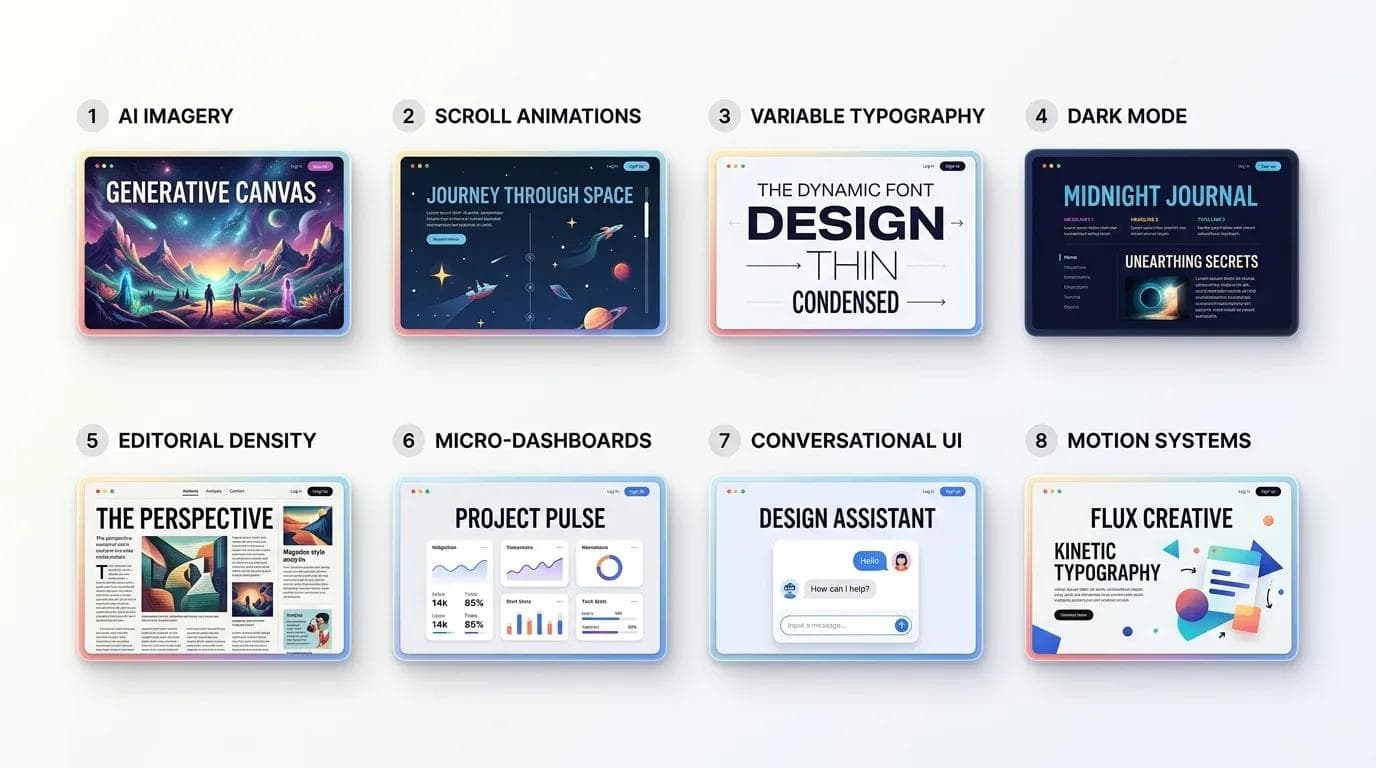
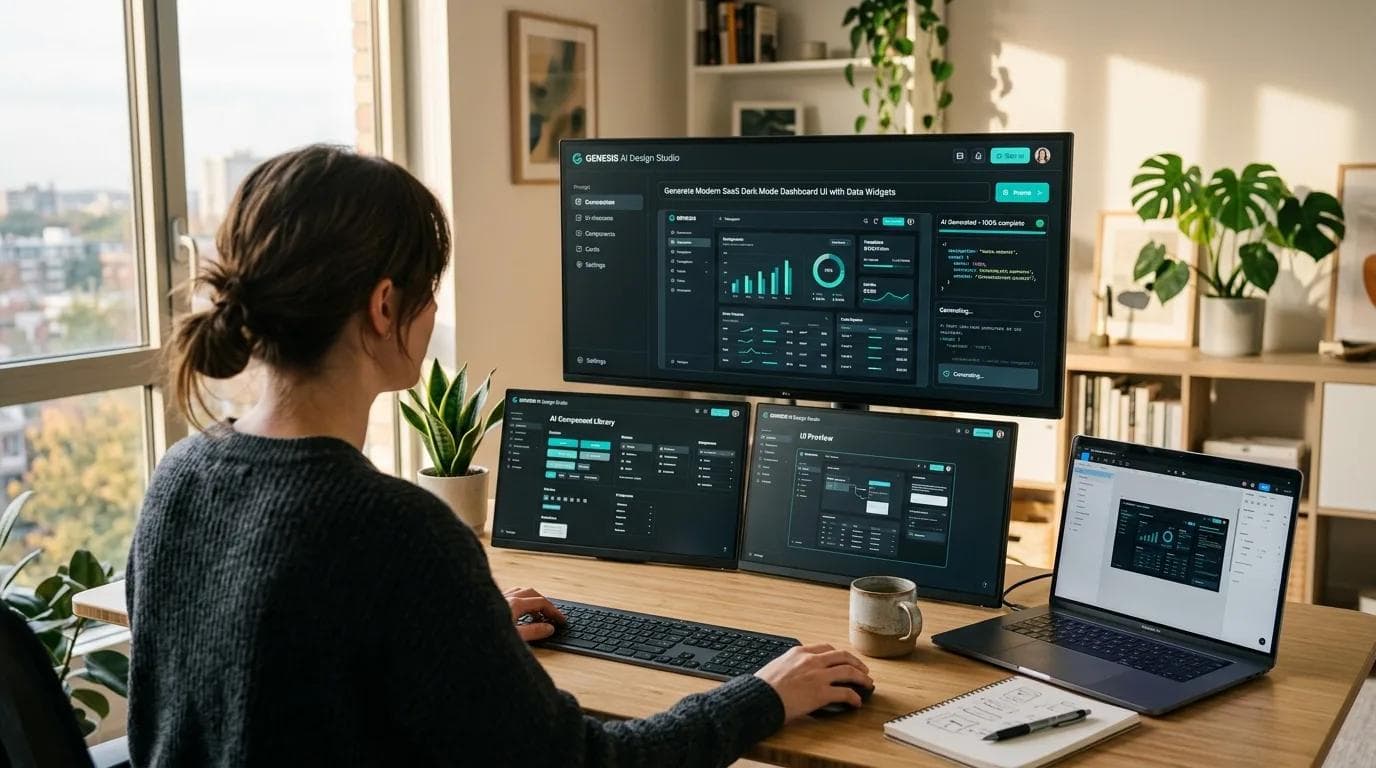
1. AI-generated imagery — with provenance signals
A year ago, using AI imagery on a production site felt slightly transgressive. In 2026 it's the default for hero imagery, brand moodboards, and editorial content. What's changed is the trust layer on top.
What makes it work:
- C2PA content credentials for provenance
- Small 'AI-assisted' disclosures where the audience cares
- Compositing AI outputs with human editing rather than shipping raw generations
- Distinct visual house style across the set — not generic Midjourney-default
2. Scroll-driven animations with view-timeline API
Scroll animations are old. What's new in 2026 is that browsers finally support the CSS view-timeline API across Chrome, Safari, and Firefox. That means no more GSAP or framer-motion just to animate on scroll — smaller bundles, smoother performance, declarative syntax.
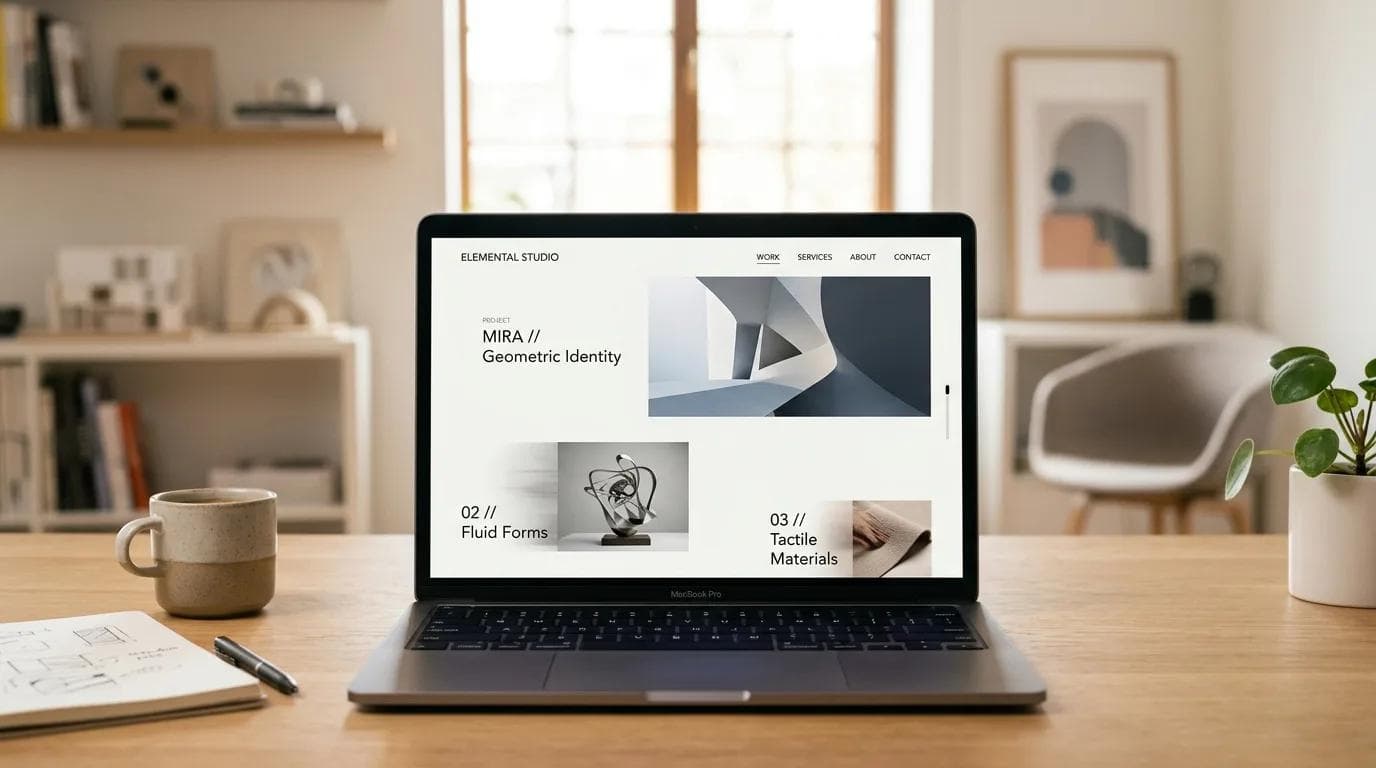
3. Performance-first typography
Variable fonts are winning. One file serves every weight at a fraction of the bytes. Combined with font subsetting and self-hosting, this alone can cut LCP for text-heavy hero sections in half.
What to ship in 2026:
- Variable fonts instead of four separate weight files
- Font subsetting — serve only glyphs used on the page
- Self-hosted fonts — Google Fonts is dying as a performance pattern
- font-display: swap with properly sized fallback metrics for zero CLS
4. Conversational UI over traditional nav
Most sites still ship conventional nav bars — but increasingly with a persistent chat input or 'ask me anything' search that uses an LLM to route users. It's supplementing navigation, not replacing it.
What works:
- Small footprint — not a modal takeover
- Positioned near the search box or header
- Confidently says 'I don't know' when it doesn't
- Cites source pages so users can dive deeper
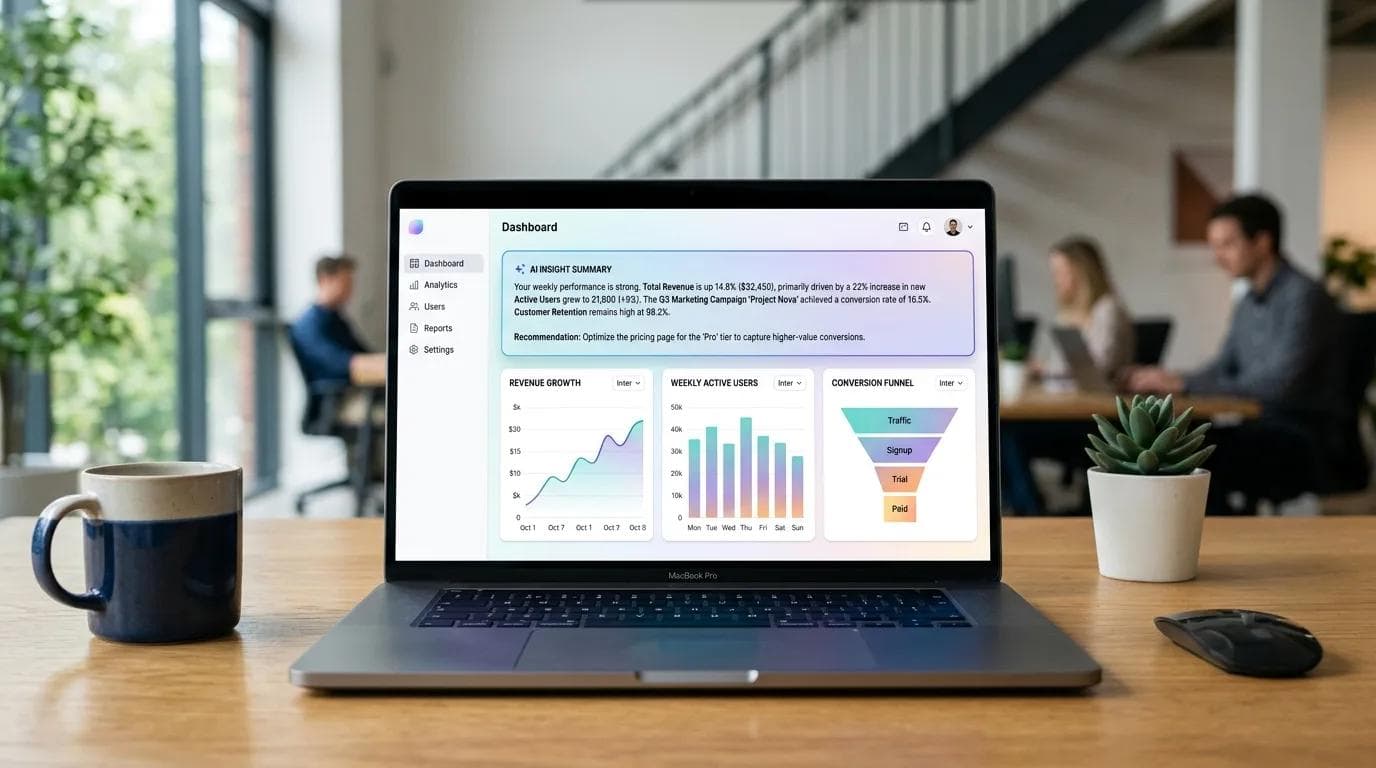
5. Micro-dashboards with AI summarization
Dashboards used to be charts. In 2026, dashboards are three-sentence AI summaries at the top, followed by charts. 'Revenue up 12% this week, driven by Pro. Churn in Starter up 0.4% — likely the pricing change on the 15th.' Users scan the summary instead of the charts.
6. Editorial density over whitespace
The 2020-2023 era maximized whitespace. The reaction is here: sites in 2026 are denser, more text-rich, more newspaper-like. Substack set the tone. SaaS companies and agencies now ship pages closer to the New York Times than Apple.com.
Why the shift:
- Dense editorial signals human craft in a world of AI content
- Less above-the-fold media = faster LCP
- Readers scanning for substance scroll past airy pages
- Trust signals fit better in dense layouts than sparse ones
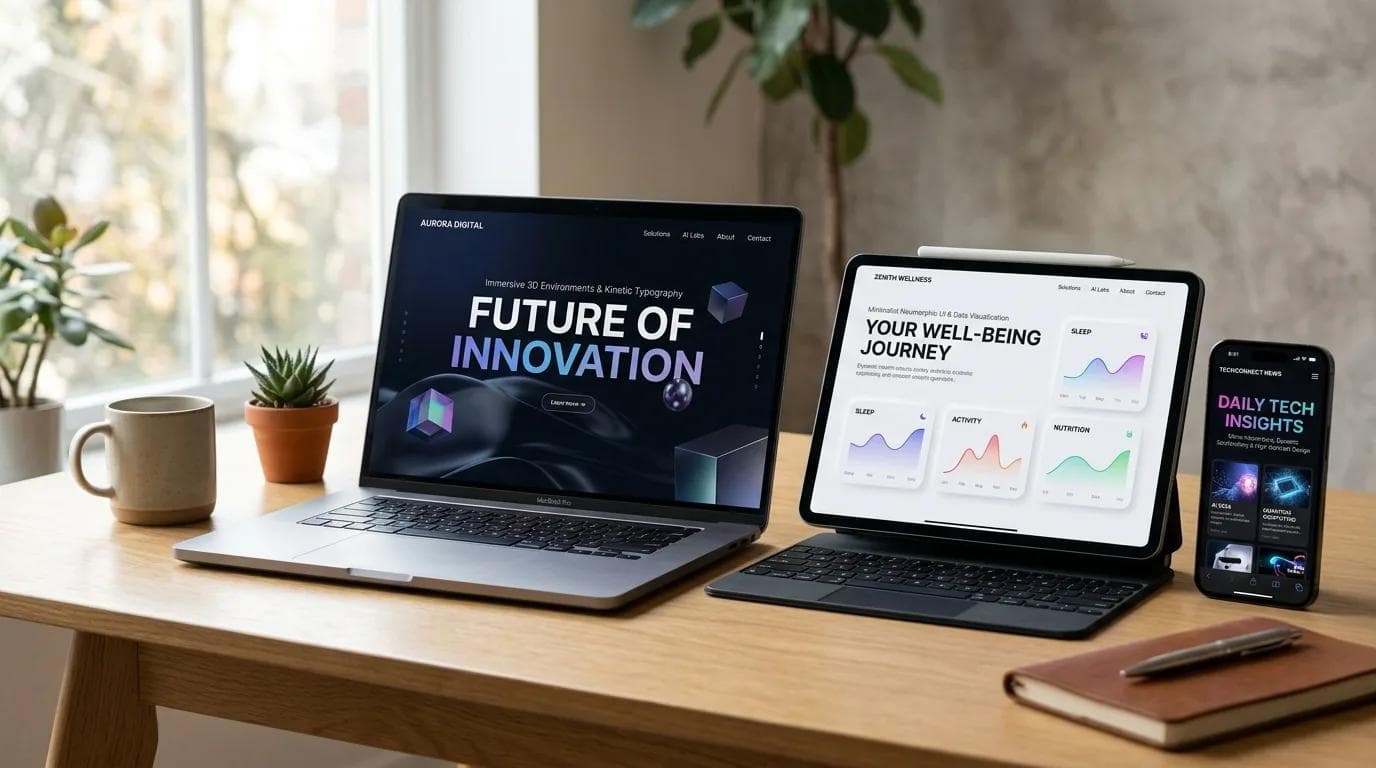
7. Dark mode as default
Dark mode stopped being a toggle and started being the default for developer-tooling, SaaS dashboards, and startup landing pages. Light mode is the toggle now. Consumer sites still default light; B2B developer-facing sites don't.
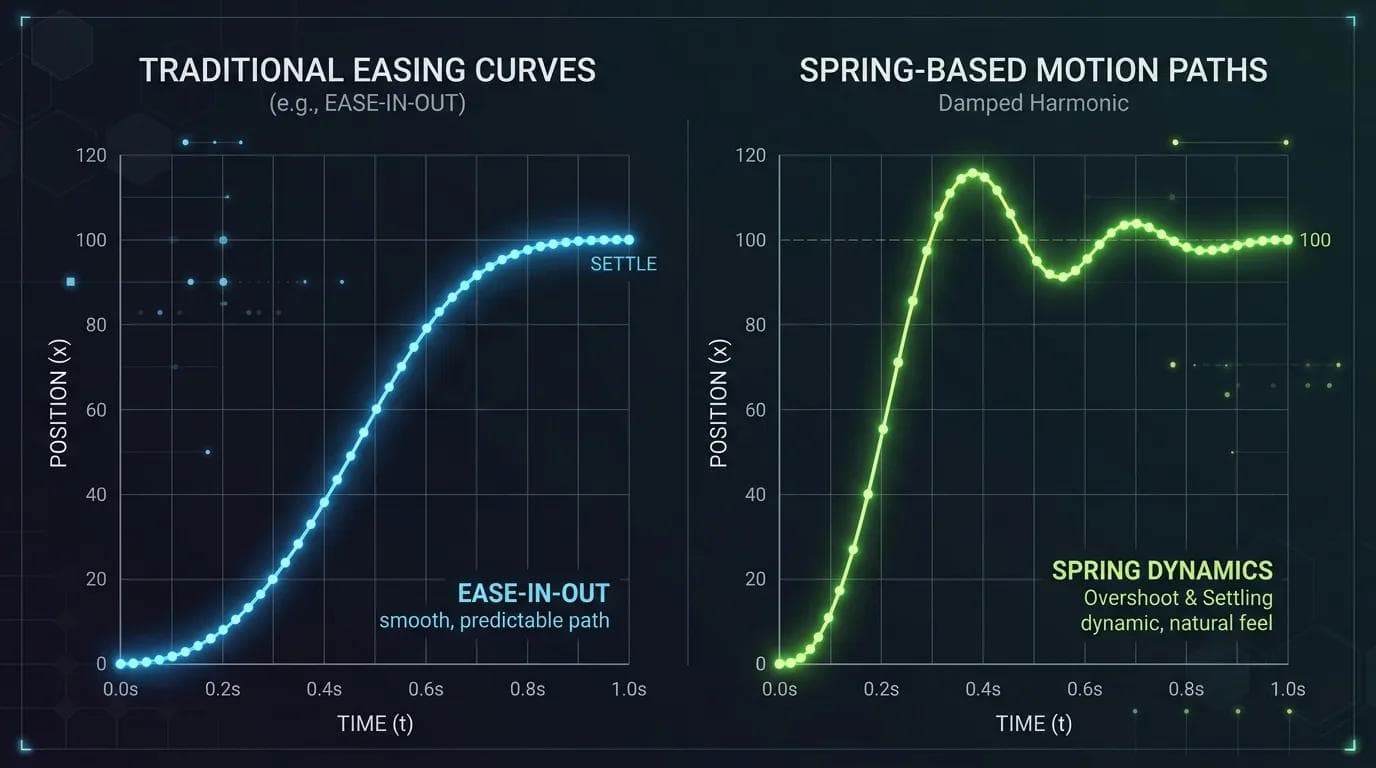
8. Motion systems with spring physics
Transitions used to be ease-in-out timing curves. In 2026, they're spring physics — framer-motion 12 and Motion One ship tiny spring implementations that make interactions feel handheld-physical. The effect is subtle but real.
Four trends to skip
Not everything visible is worth copying. These four are over-indexed in design press and underperform in production:
1. Skeuomorphic neumorphism
Soft embossed 'card inside the page' aesthetics are back in Dribbble corners. They fail accessibility contrast tests, confuse users about what's interactive, and look dated within six months. If Dribbble is where your references come from, widen the pool — we keep a list of design inspiration sites for 2026 that favour craft over screenshot appeal.
2. 3D Spline hero on every page
Spline and Rive opened up 3D on the web beautifully. But making 3D your hero on every page kills LCP and bloats the first paint. Use 3D for one hero moment, not as decoration across the site.
3. Brutalist design cargo cult
Harsh fonts, broken grids, jarring colors. Distinctive on a screenshot, hostile on a real site. A handful of brands make it work because their identity is abrasive. Your B2B SaaS is not one of them.
4. Auto-animated custom cursors
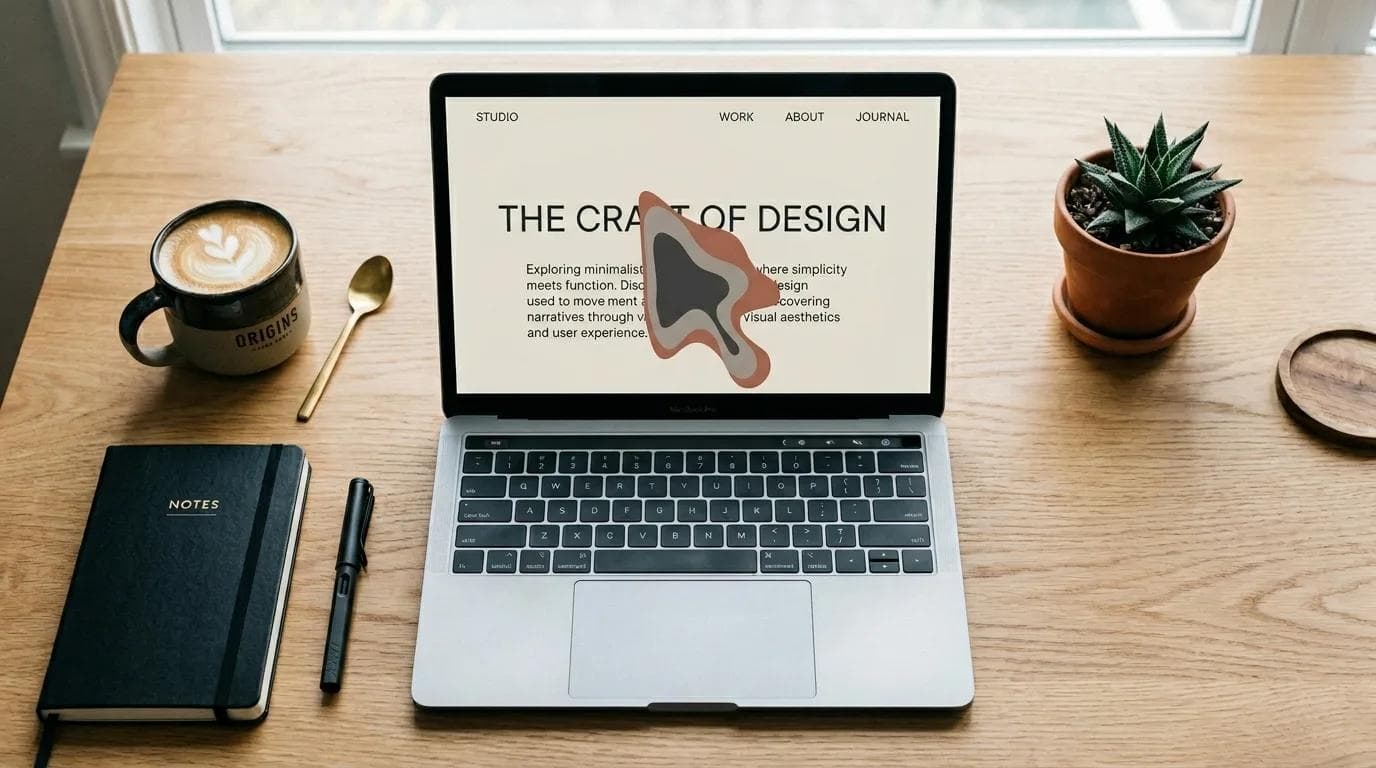
Why they fail:
- Single biggest source of mobile bugs
- Do literally nothing on touch
- Trap focus for keyboard-only users
- Delight wears off in two seconds
The meta-pattern
Every trend worth shipping in 2026 improves either performance, information density, or trust. Every trend to skip optimizes for a screenshot. Design for the session, not for the portfolio.
If you're planning a site refresh and want trends applied with judgment rather than scattered across the page, see our recent case studies at socialscript.in/work. For the mobile side of that, we cover the mobile UX patterns that convert in a separate guide. Much of this is downstream of how AI is reshaping web design — worth reading alongside.