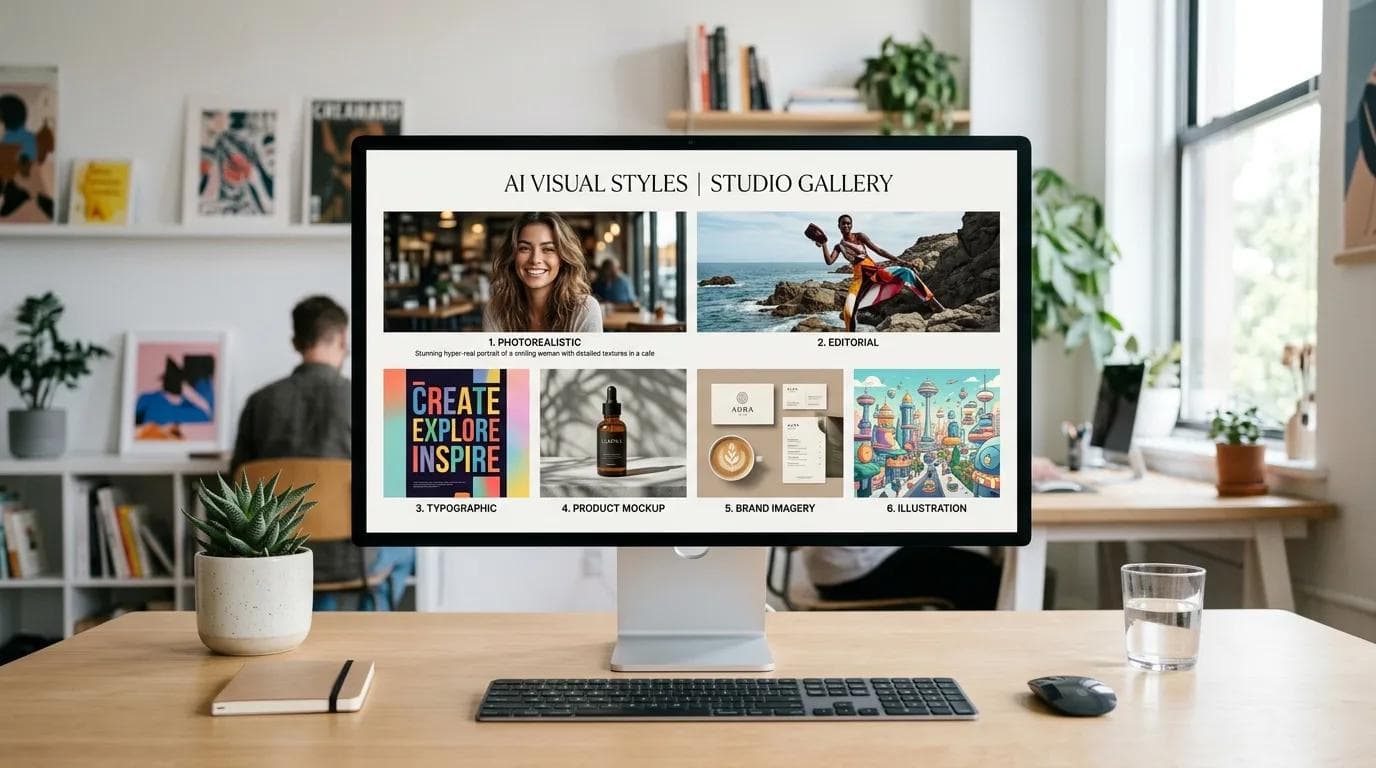
The AI image landscape looks nothing like it did in 2023. Midjourney is no longer the default answer — six different models now dominate distinct lanes, and picking the right one for a deliverable matters more than chasing whatever is trending. At SocialScript we use all of them. Here's what actually ships, where, and why.
The six models that matter in 2026
Each model has become specialized. You can no longer pick one and be 'covered' for every use case.
1. Midjourney v7 — the aesthetic leader
Released late 2025. Still the benchmark for pure visual quality, mood, and editorial imagery. The new '--p' personalization mode learns from reference images; the 'Design' preset reduces the amount of prompt engineering needed. For reference images worth feeding it, our roundup of design inspiration sites, including Godly and Typewolf, is a better starting point than a generic image search.
Best for:
- Mood boards and brand imagery
- Concept art and editorial hero images
- Stylized illustrations and painterly looks
- Anything where the 'vibe' matters more than precision
Weak for:
- Precise compositional layouts
- Product mockups with specific structure
- Multi-line text rendering
- Consistent character or object across a set (without --p)
2. Flux.1 Pro — the prompt-adherence workhorse
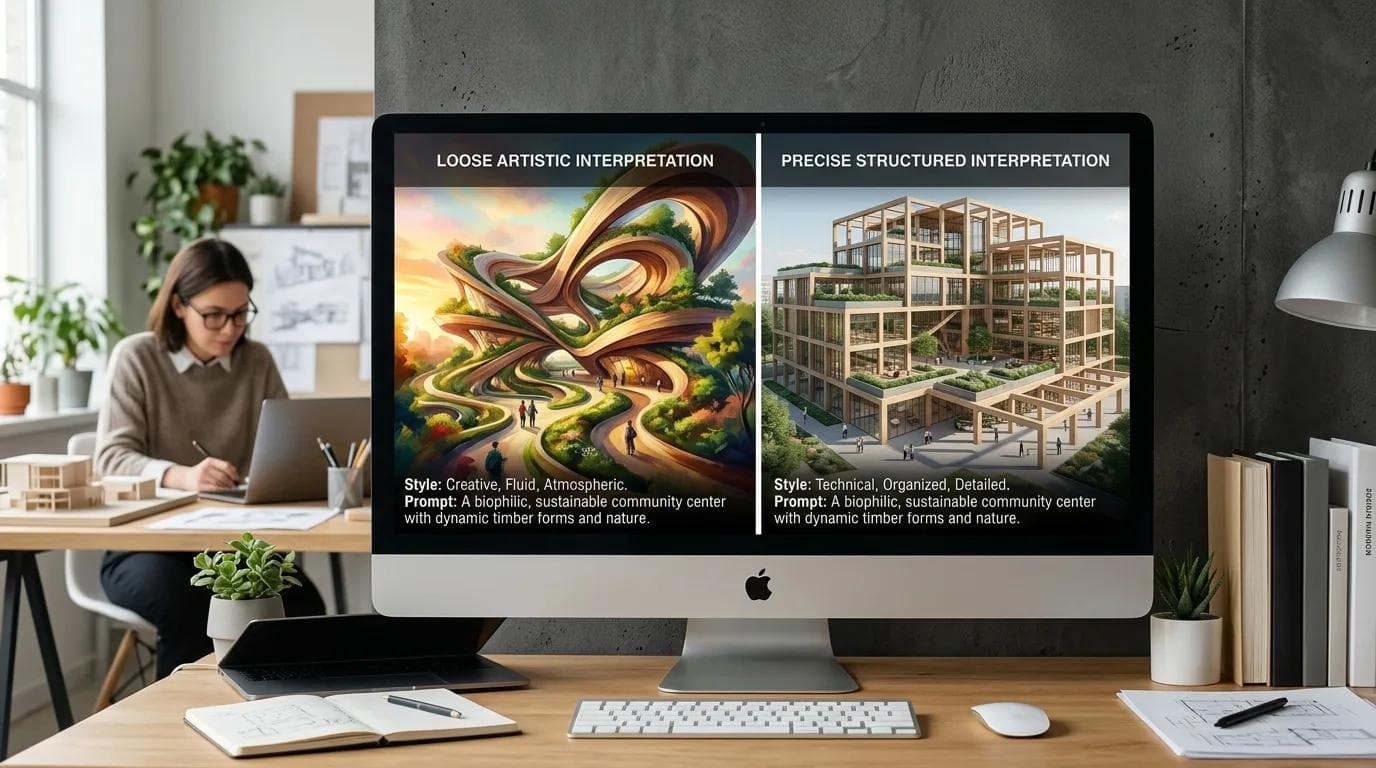
From Black Forest Labs, the team that left Stability AI. Exceeds every other model at prompt adherence, especially for complex compositions with spatial relationships. Most 'AI product mockups' on production landing pages are Flux.
Best for:
- Product mockups and UI concept renders
- Scenes with multiple subjects and precise positioning
- Typography that's decorative (not paragraph copy)
- Fast latency — fits into interactive workflows
Weak for:
- Artistic outputs where structure matters less than feel
- Highly stylized painterly work (Midjourney wins here)
3. Ideogram 3.0 — the typography specialist
Released Q1 2026. Has one superpower: text. If the output needs integrated typography — posters, t-shirts, book covers, social carousels — nothing else comes close.
Best for:
- Marketing collateral with copy baked in
- Posters and editorial lockups
- Social media graphics with headline text
- Typographic experimentation as design element
Weak for:
- Photorealistic imagery
- Complex scenes without text
4. DALL·E 4 / GPT Image — the conversational one
OpenAI's image model inside GPT-5. No Discord, no separate interface, just a chat. Quality gap with Midjourney has closed; the 'edit this specific region' flow is genuinely useful.
Best for:
- Rapid conversational iteration
- Edits on specific image regions via chat
- Non-designers who live in ChatGPT already
Weak for:
- Brand-distinct visuals (recognizable house style)
- Aesthetic top-tier output (Midjourney still leads)
5. Adobe Firefly 4 — the commercial-safe one
The only major model with a commercial-safe guarantee — every training image is licensed, and Adobe indemnifies enterprise customers. For agency work where IP risk matters, this is non-negotiable on certain client projects.
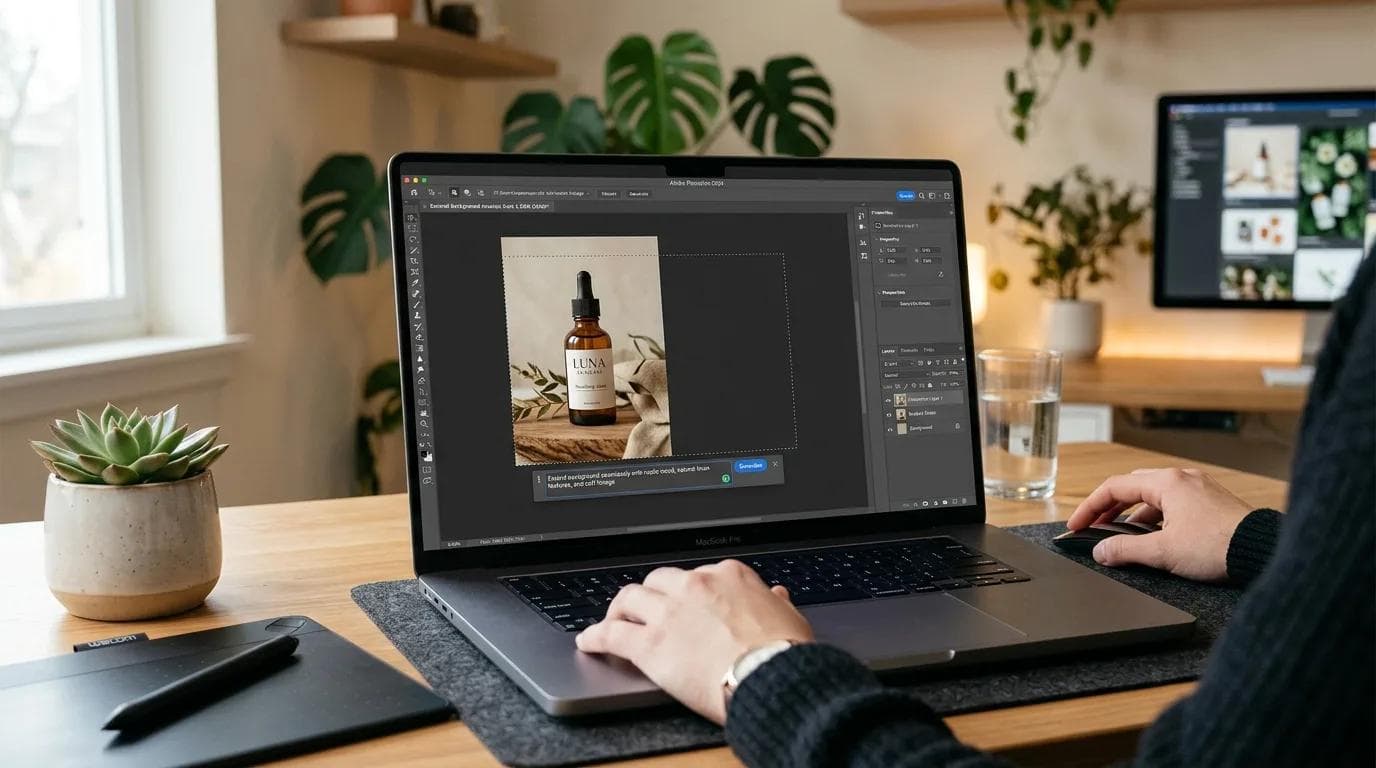
Best for:
- Enterprise and agency work with IP sensitivity
- In-context editing inside Photoshop / Illustrator
- Generative Fill for product retouching
- Text-to-Vector for brand mark exploration
Weak for:
- Top-tier aesthetic outputs compared to Midjourney
- Speed (slower than Imagen or Flux)
6. Google Imagen 4 — the fastest workhorse
Fastest of the six — often under 2 seconds per generation. Excellent text rendering (second only to Ideogram). Lowest API pricing through Gemini. The blog image you're reading was made with Imagen 4 through our internal pipeline.
Best for:
- Products that ship AI image features (API cost matters)
- Fast bulk generation for mood exploration
- Text within images as a secondary need
- Commodity-quality speed-sensitive output
Weak for:
- High-end editorial aesthetic (Midjourney wins)
- Highly specific compositional prompts (Flux wins)
How we orchestrate these at SocialScript
No single model wins every use case. A typical client engagement routes different jobs to different models through an internal pipeline.
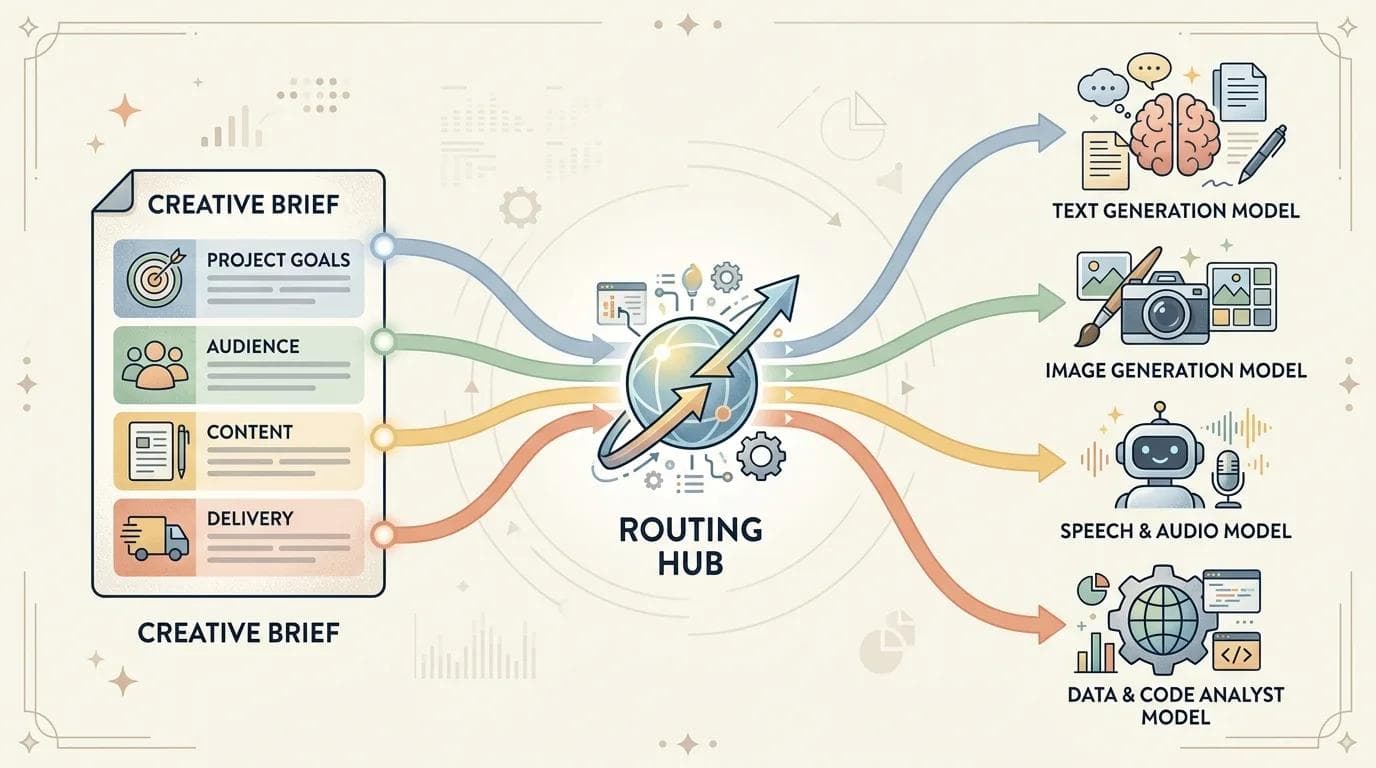
Our routing rules:
- Brand mood boards and hero imagery → Midjourney v7
- Product mockups and UI concept renders → Flux.1 Pro
- Anything with typography baked in → Ideogram 3
- In-Photoshop edits and enterprise client work → Firefly 4
- Fast iteration on concept mood → Imagen 4
- Quick conversational edits during review → DALL·E 4
A four-question framework for choosing
When a new brief comes in, we answer these four in order:
- Does it need typography? → Ideogram 3
- Does it need photorealism with tight composition? → Flux.1 Pro
- Does it need in-Photoshop editing or IP indemnification? → Firefly 4
- Is it mood, concept, or editorial? → Midjourney v7
Prompting tactics that actually work in 2026
Three years of collective wisdom has distilled to a handful of principles that hold up across every model:
- Lead with the subject, not the style — style goes at the end of the prompt
- Specify the camera (35mm lens, wide angle, overhead) for photorealism
- Name the art movement or designer era for stylistic output
- Set --ar explicitly; never rely on default aspect ratios
- Iterate with seed control for consistency across a set
- Write prompts like art direction, not like Google searches
Rights, IP, and what clients need to know
The US Copyright Office clarified in 2025: AI-generated images are not copyrightable, but AI-assisted images with substantial human modification are. The practical implication for agency work matters.
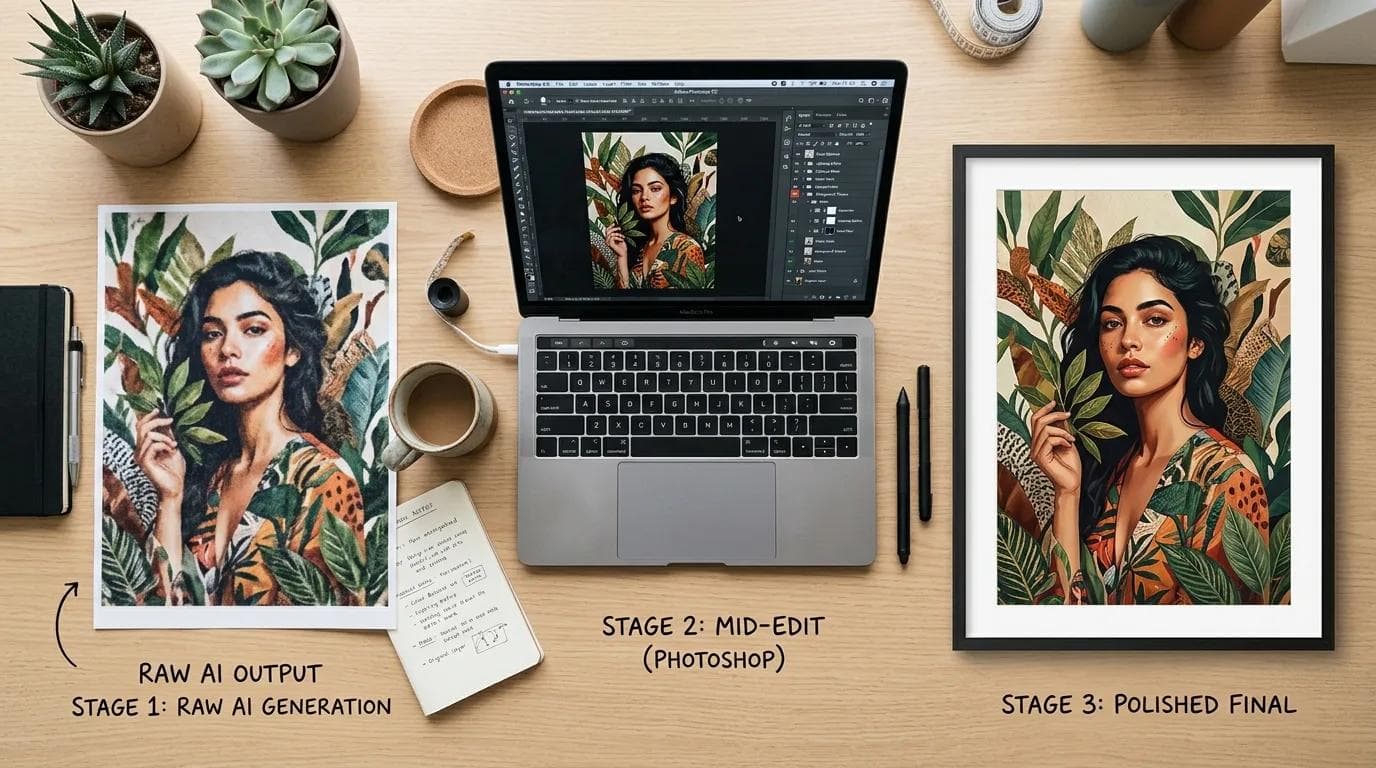
What this means for client work:
- Treat AI outputs as starting points, never as finals
- Composite, edit, and extend in Photoshop or Figma before delivery
- Disclose AI usage contractually up front
- Use Firefly for anything requiring IP indemnification
- Keep prompt logs — they're evidence of creative direction if challenged
What's coming next
Three trends are reshaping the space through 2026-2027:
- Video-native models (Sora 2, Veo 3, Pika 2) producing still frames as good as dedicated image models
- Zero-shot brand consistency through reference images, replacing LoRA fine-tuning
- Sub-500ms real-time generation bringing AI inside Figma, Framer, and Webflow natively
The bottom line
Pick two or three models deliberately based on your actual workflow, not the tool trending on design Twitter this week. The best designers we work with have a clear mental map of which tool solves which problem — the rest spend too much time exploring and not enough shipping.
If you're building a product that needs AI imagery baked in, or a brand system that leverages generative tools responsibly, see our AI-powered design work at socialscript.in/services/ai-web-design. Image models are only half the stack — the other half is the AI design agents now reshaping UI workflows.